
Durdle Door Visitor Guide
Durdle Door is one of the most recognisable landmarks on the Jurassic Coast and one of the most photographed places in Dorset.
The enormous natural limestone arch rises from the sea between Lulworth Cove and Weymouth, framed by a breathtaking stretch of white chalk cliffs. For many visitors, seeing Durdle Door is the absolute highlight of a trip to Dorset.
You can visit Durdle Door directly from the dedicated visitor car park above the beach, or make it part of a spectacular coastal walk from Lulworth Cove.
What is Durdle Door?
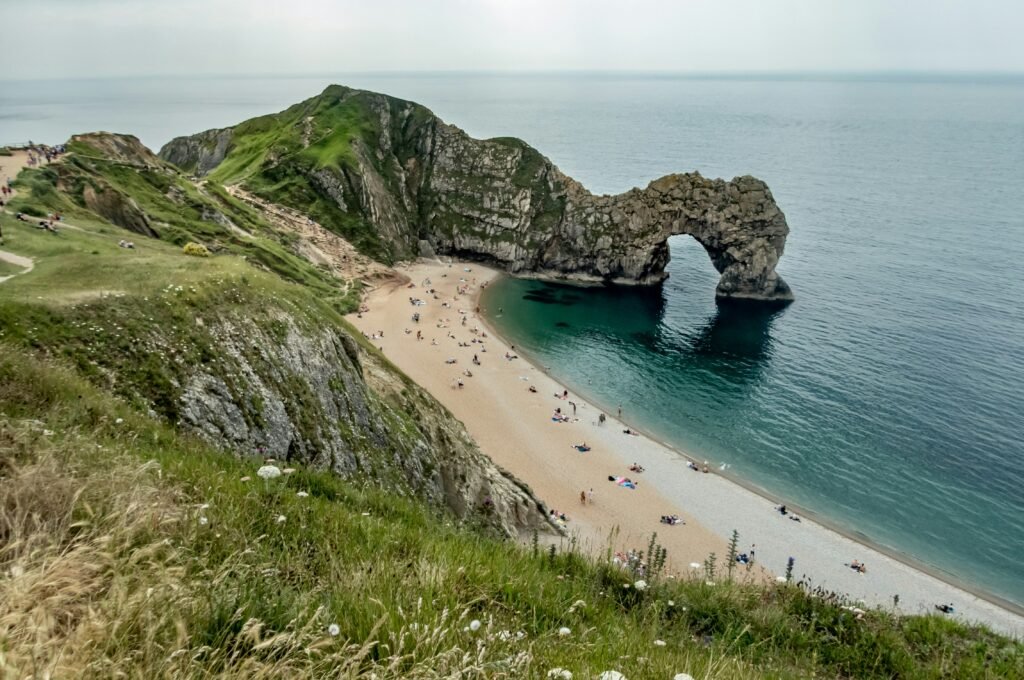
Durdle Door is a natural limestone arch formed by thousands of years of coastal erosion.
Over time, waves gradually eroded the softer rock layers surrounding a resilient band of Portland limestone. Eventually, the sea broke through the hard stone, carving out the iconic arch visible today.
The name “Durdle” comes from the Old English word thirl, meaning to bore, pierce, or drill.
Today, Durdle Door forms part of the Jurassic Coast World Heritage Site, a 95-mile stretch of coastline celebrated globally for its unique geology and fossils.
How Do You Get to Durdle Door?
There are two primary ways to reach Durdle Door:
Option 1: Drive to the Durdle Door Visitor Area
The most direct option is to drive to the Durdle Door visitor car park located on the clifftop.
- The Walk Down: From the car park, a steep gravel path leads down toward the cliff edge and viewpoint. Accessing the beach requires walking down a long, steep flight of timber steps.
- The Climb Back: Keep in mind that the return walk back up to the car park is a continuous uphill climb that can be tiring, particularly on warm summer days.
Option 2: Walk from Lulworth Cove
For many visitors, the most rewarding way to reach Durdle Door is on foot from Lulworth Cove.
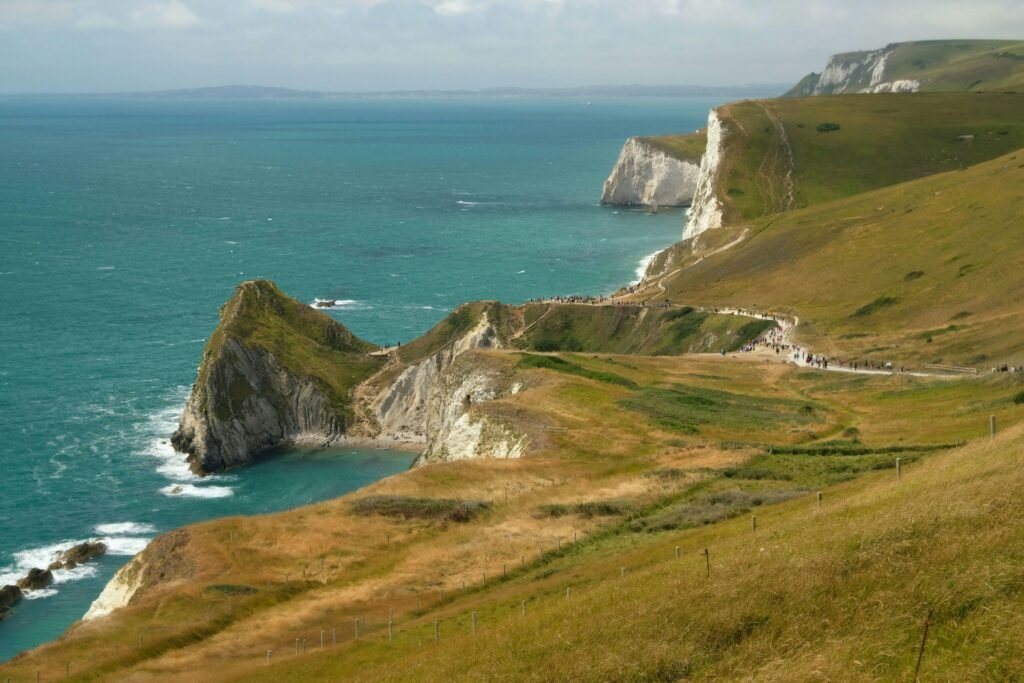
- The Route: The path follows the South West Coast Path over Hambury Tout, rewarding you with panoramic coastal views along the way.
- Distance: The route is approximately 1 to 1.2 miles (1.8 km) each way. Allow plenty of time for steep ascents, photography, and rest stops.
Can You Walk from Lulworth Cove to Durdle Door?
Yes! Walking from Lulworth Cove to Durdle Door is one of the most popular coastal walks in the UK.
While short in distance, the trail features steep climbs over uneven terrain. Sturdy, sensible footwear (trainers or walking boots) is highly recommended.
The reward is well worth the effort—as you crest the hill, you’ll take in sweeping views of Man O’War Bay before arriving above the arch. If you are staying locally in West Lulworth, walking allows you to leave your car behind entirely.
Durdle Door Beach & Facilities
Durdle Door beach sits directly beneath the famous stone arch.
The beach consists of a mix of sand, shingle, and pebbles, surrounded by towering cliffs. It’s a magnificent place to sit and soak in the scenery, particularly outside peak summer hours.
- Accessibility: Getting to the beach requires navigating a long, steep set of wooden stairs. As a result, the beach is not easily accessible for wheelchairs or pushchairs.
- Facilities: There are no toilets, cafes, or rubbish bins down on the beach itself. The nearest toilets and food kiosks are located up near the main Durdle Door car park or back in West Lulworth village.
Can You Swim at Durdle Door?
Swimming at Durdle Door is popular in warm weather, but there are no lifeguards on duty.
The beach opens directly to the English Channel, meaning water conditions, underwater currents, and tides can change rapidly.
- Safety Advice: If you choose to enter the water, exercise extreme caution. Never swim alone, avoid jumping from the arch or surrounding cliffs (tides hide submerged rocks), and stay clear of the cliff bases due to potential rockfalls.
How Long Do You Need at Durdle Door?
- Quick Viewpoint Stop: Allow 1 to 1.5 hours if driving to the main car park just to walk to the cliff edge and take photos.
- Standard Visit: Allow 2 to 3 hours to walk down to the beach, explore Man O’War Bay, and walk back up.
- Full Coastal Trip: Allow 4 to 5 hours if walking from Lulworth Cove, spending time on the beach, and returning to West Lulworth for food and drink.
Durdle Door Parking & Fees
There is no admission fee to view Durdle Door or visit the beach—access is completely free.
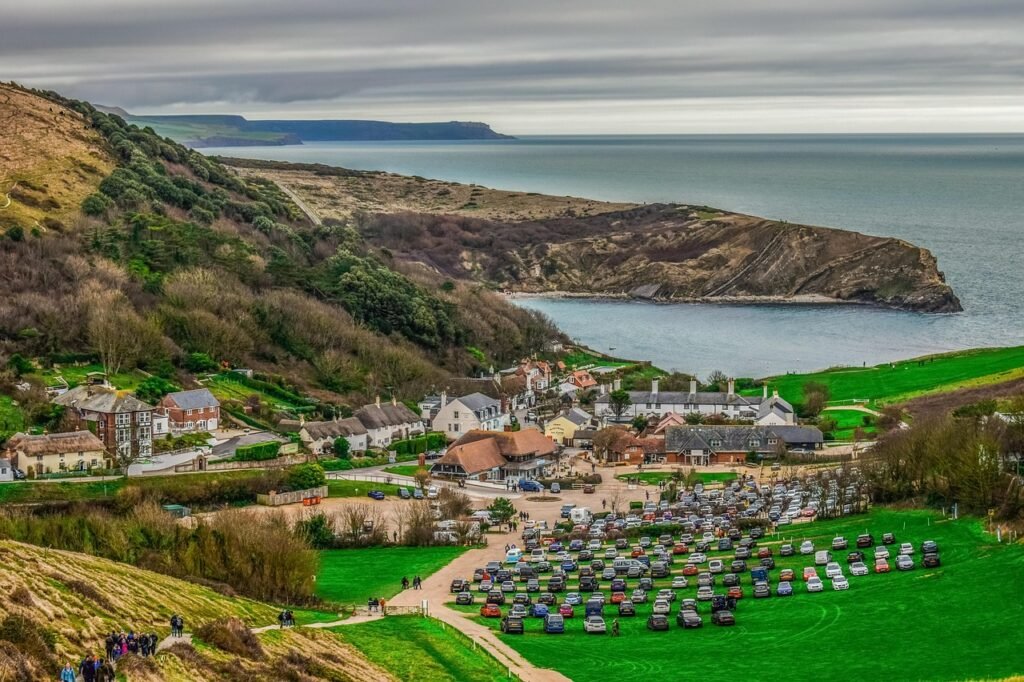
However, if you drive, you must pay for parking if you use the Durdle Door or Lulworth Cove visitor car parks (pay-and-display / mobile app)
- Peak Times: Parking fills rapidly on sunny summer weekends, bank holidays, and school breaks. Arriving before 9:30 AM or after 4:00 PM helps avoid traffic queues.
Best Time to Visit Durdle Door
Durdle Door is spectacular in every season, but conditions vary:
- Early Morning: The quietest time to visit. Soft morning light is ideal for photography, and car parks are empty.
- Late Afternoon & Sunset: The setting sun lights up the limestone cliffs and natural arch, making it a favorite for evening walks.
- Summer: Offers warm weather for beach days, but expect large crowds and busy trails.
- Spring & Autumn: Crisp weather, fewer visitors, and vibrant coastal paths.
- Stargazing & Full Moons: Because the Lulworth area has low light pollution, the clifftops above Durdle Door are popular for stargazing and night photography.
Visiting with Children & Dogs
Visiting with Children
Older children comfortable with walking will love exploring the coastline. However, close supervision is required at all times due to sheer cliff edges, steep steps, and deep water. The trail is not suitable for pushchairs.
Dog-Friendly Info
Dogs are welcome at Durdle Door year-round!
- Keep dogs on leads along the coastal path and cliff tops.
- Ensure your dog is comfortable with steep steps if heading down to the beach, and bring plenty of fresh drinking water.
What to Bring to Durdle Door
Be prepared for an outdoor coastal environment:
- Sturdy trainers or walking boots (avoid flip-flops on the steep path)
- Plenty of drinking water (no water taps on the beach)
- Sun protection (sunscreen, hats, sunglasses)
- Windproof or waterproof outer layer
- Water shoes if planning to walk on the shingle or step into the sea
- A small backpack to carry trash back up off the beach
Don’t Miss: Man O’War Bay
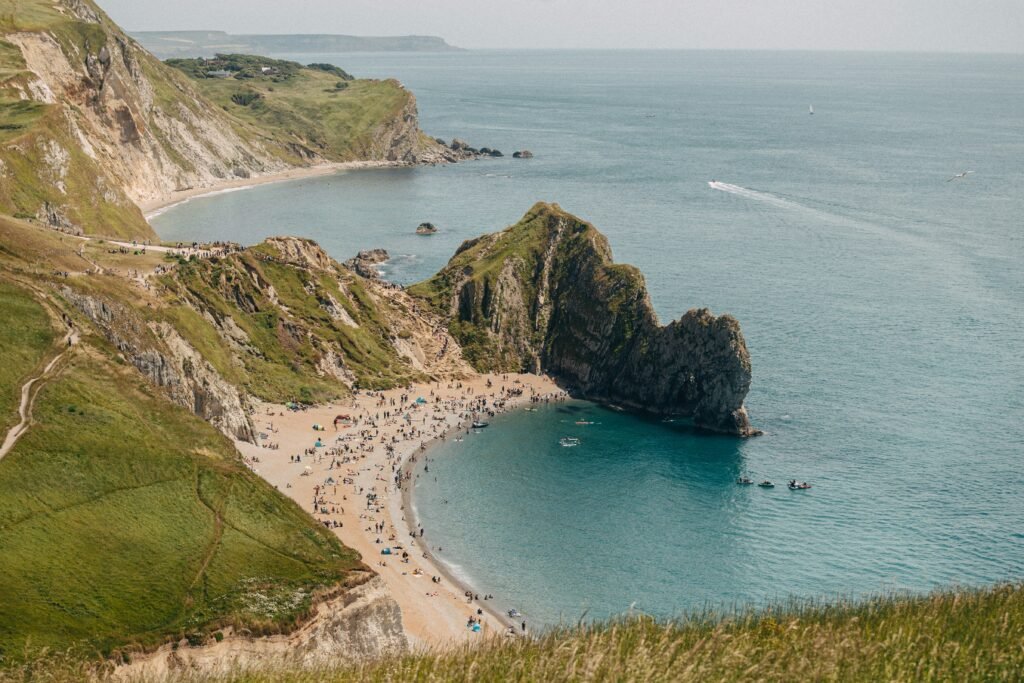
Located right next to Durdle Door, Man O’War Bay is an equally stunning crescent-shaped bay protected by a reef of limestone rocks. Take time to walk along the cliff headland between the two bays to enjoy contrasting views of both landmarks.
Where to stay near Durdle Door
There are plenty of accommodation options within easy reach of Durdle Door. In Lulworth you’ll find a choice of hotels, holiday cottages, self-catering properties, pubs with rooms and camping and glamping.
If you’d prefer to stay closer to Durdle Door itself, there are also a range of accommodation options at the holiday park.
Stay in LulworthInteractive Map of Accommodation in Lulworth
Use the map to explore accommodation options around Lulworth and find somewhere that suits your stay.
Please note that we may receive a commission when you book accommodation through some of the links on this site.
Plan Your Visit
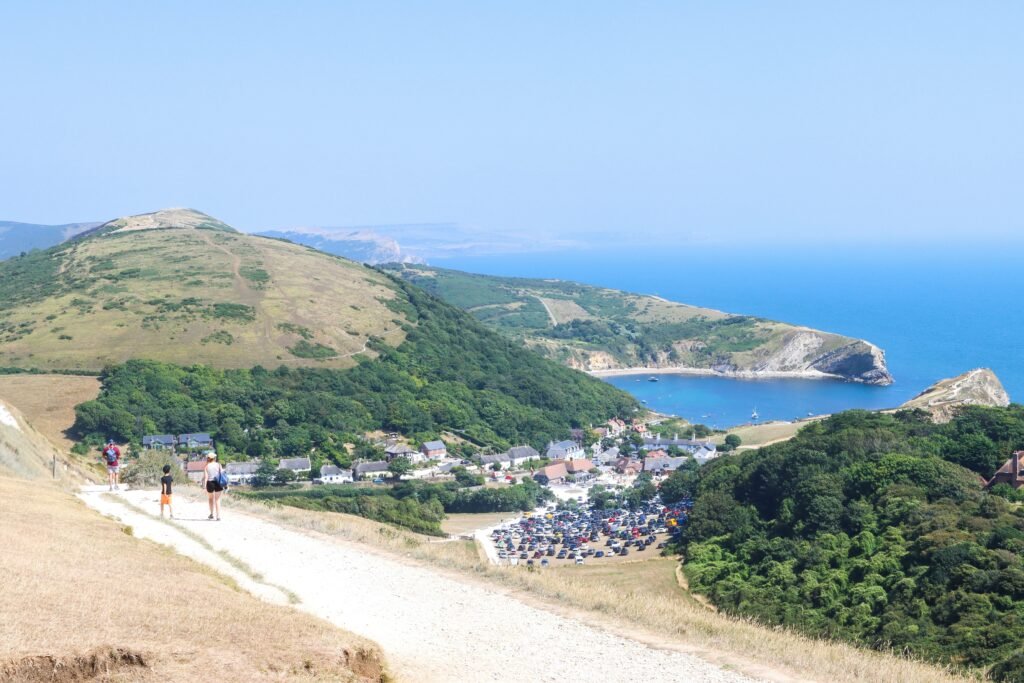
Parking, getting here, range access and other practical information.
Explore
The surrounding coastline, countryside and places to explore.
Things to Do
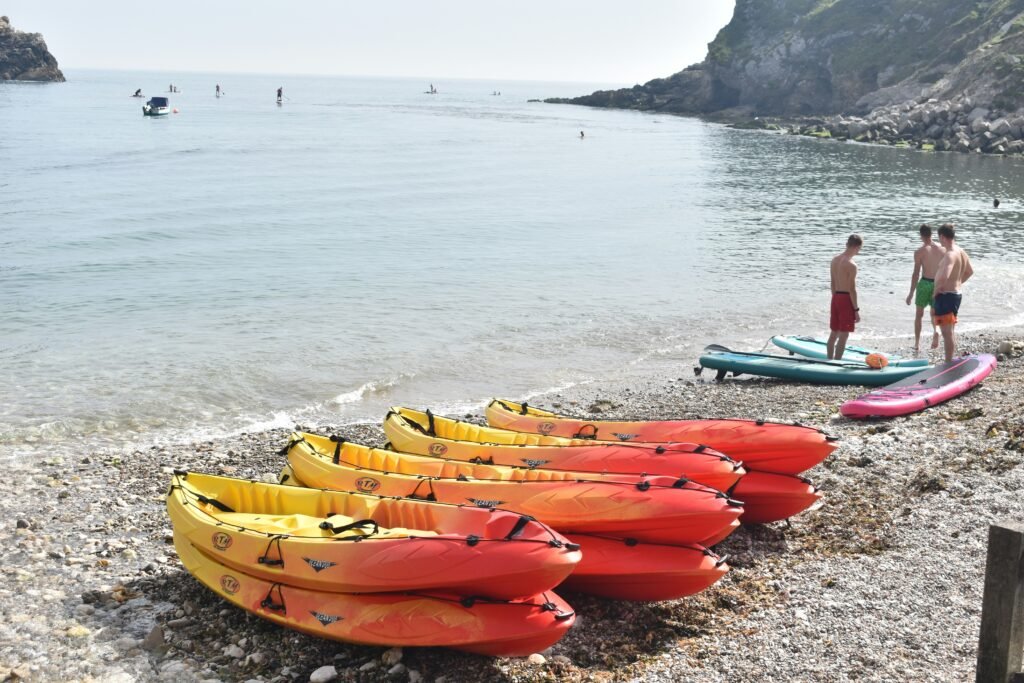
Walks, beaches, water activities, wildlife and ways to enjoy the coast.
Eat & Drink
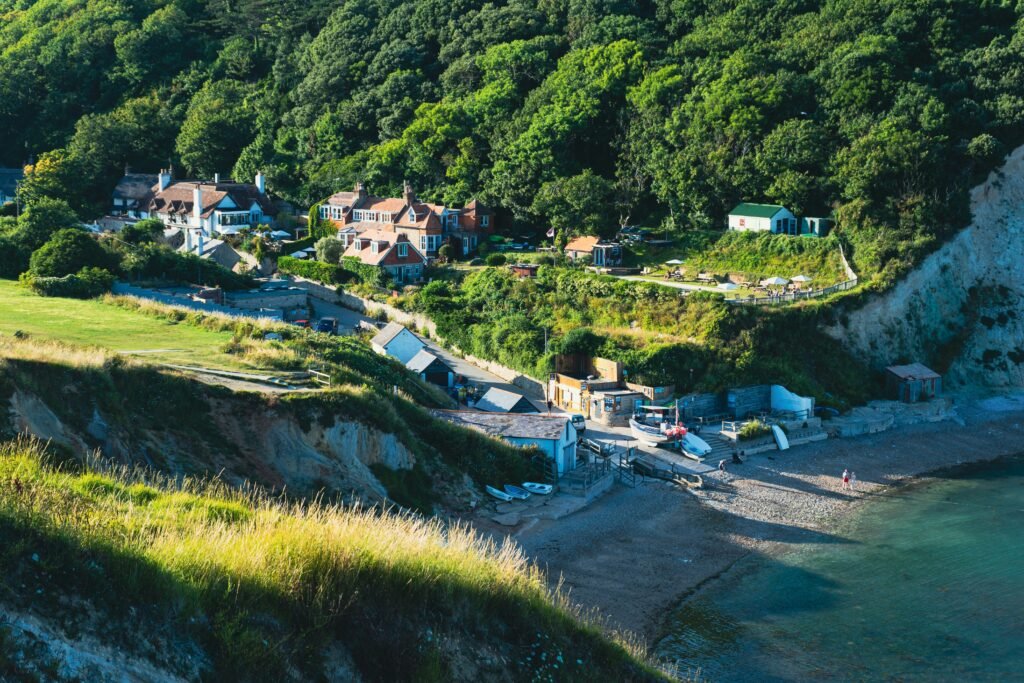
Pubs, restaurants, cafés, ice-cream parlours and shops.
Where to Stay
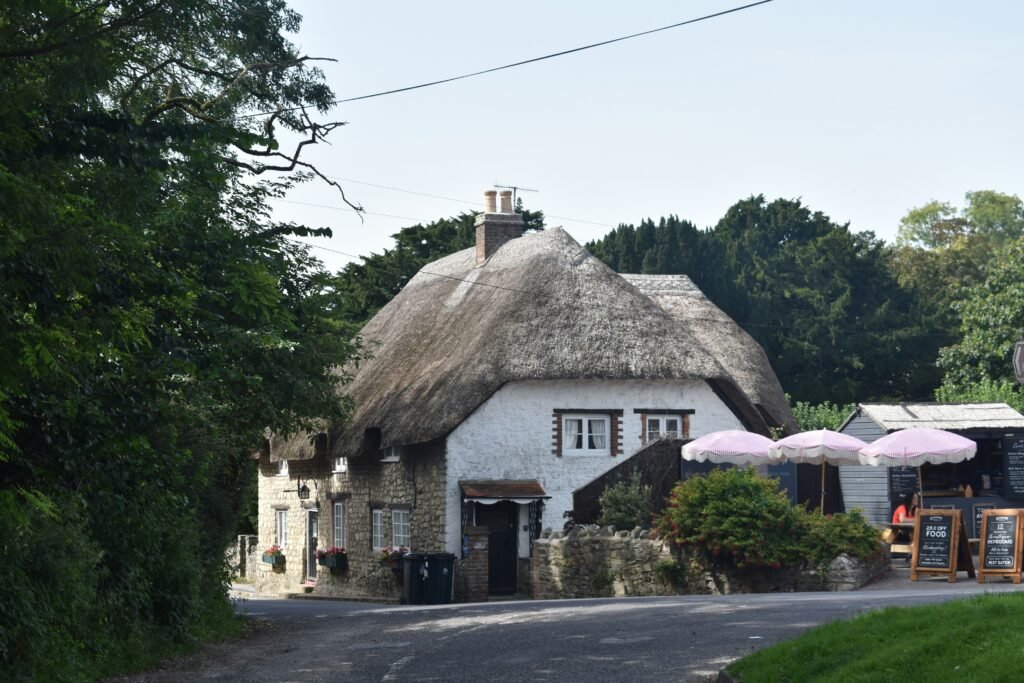
Find accommodation in West Lulworth and around Lulworth Cove.
This Durdle Door guide was last updated in September 2026.
If you spot an error or have more up-to-date information, please let us know at contact@inlulworth.co.uk.